
How staffing and nearshore firms stop proxy candidates
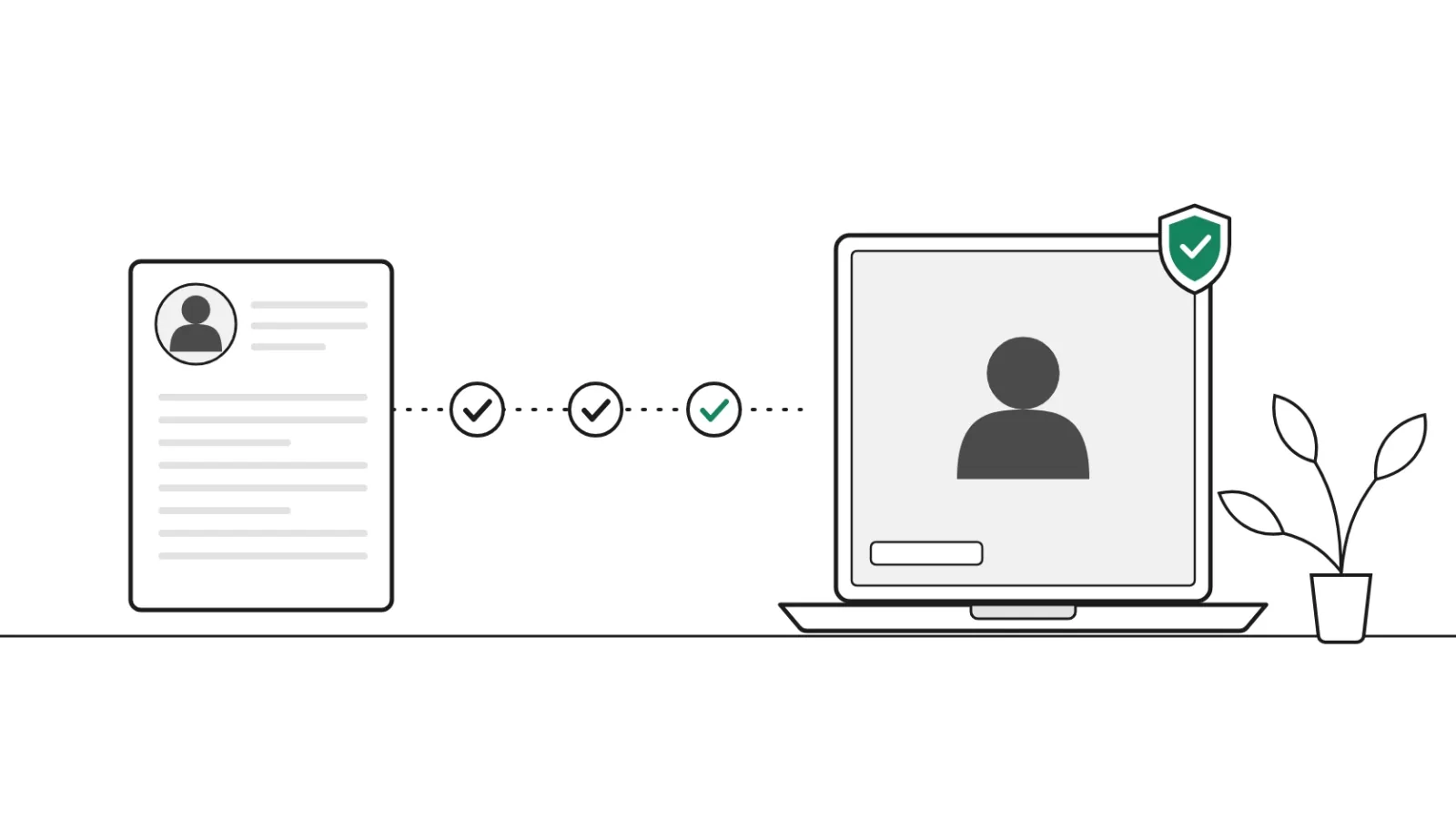
Staffing and nearshore firms stop proxy candidates by confirming the same person at every stage: intake, first screen, a deep resume round, the client interview and day one. One check is not enough, because the swap can happen after it.
On this page
- Introduction
- Why this risk lands on staffing firms
- What it looks like: proxy interview, bait and switch, lip syncing
- What to check at each stage
- If you suspect it but cannot prove it
- If a different person showed up after the hire
- Are in-person finals the answer?
- Where Verified Call fits
- Questions staffing firms ask
- Sources
Key takeaways
- You vouch for every person. If the person on assignment is not the person the client interviewed, it lands on your firm.
- Check at every stage. Intake, first screen, a deep resume round, the client interview and day one.
- Deep resume questions work live. Follow-ups on real decisions from their own past work are hard to answer for someone who was not there.
- A suspicion is not proof. Add a step, repeat the check, and hold the submission until you can confirm.
You vouch for every person you submit. If the person on assignment is not the person the client interviewed, the problem lands on your firm, not only on the candidate. This guide is for owners of remote developer staffing and nearshore firms. It covers where proxy candidates get in, what to check at each stage, and what to do when you suspect it but cannot prove it.
Why this risk lands on staffing firms
A hiring team that gets this wrong loses a hire. A staffing firm also risks the client's trust. The American Staffing Association's tool kit describes the bait and switch as the candidate hired being "not the worker that shows up for the assignment".
It reaches large firms too. The Paypers reported on October 23, 2026 that Kforce, which places about 17,000 consultants a year, saw a rise from 2024 in cases where the person who arrived was not the person the recruiter and client had interviewed. In some cases it learned of this "weeks later, when a client raised concerns".
Your clients are also being told to look at you. In a January 2025 notice the FBI told employers to "Verify third-party staffing firms conduct robust hiring practices and routinely audit those practices". Its July 2025 notice says companies that outsource IT work "are removed from the direct hiring process". Both notices are about North Korean IT workers, but a client that reads them will ask the same questions about any supplier.
- 34%
- of US managers have confirmed a proxy in an interview (Checkr, October 15, 2026)
- 33%
- more strongly suspected one but could not prove it (Checkr, October 15, 2026)
That is a vendor's survey of 3,000 US managers involved in hiring, not of staffing firms. It still shows how often people are left with a doubt and no proof.
What it looks like: proxy interview, bait and switch, lip syncing
| Name you will hear | What happens | Where it shows up |
|---|---|---|
| Proxy interview, or candidate impersonation | Someone else answering in the interview, under the candidate's name | Strong interview, then weak work |
| Bait and switch | A different person showed up for the job | The client says the person seems different |
| Lip syncing | The candidate's face is on camera while another person speaks | Mouth and voice drift out of step, or nothing visible at all |
The proxy interview guide covers these forms in more depth, and why the signs people notice are not proof.
What to check at each stage
Timing matters. In the same survey, 29% of companies verify identity as soon as someone applies, 49% wait until after at least one live interview, and 18% wait until the final interview or later. For a staffing firm, the safest pattern is a light check at every stage.
- Intake. Look for the same phone number or email on more than one resume, which the FBI says it has seen. Compare the resume with public profiles, and confirm past employers yourself, not through details on the resume.
- First screen. Confirm who the person is, with the camera on, and note what you saw so later rounds have something to compare with. Ask for consent before you record anything.
- Deep resume round. This is the strongest thing an interviewer can do live. BrightHire's guide says a stand-in struggles with "specific follow-up questions about decisions, tradeoffs, and mistakes" from past projects. Build each question on their last answer, for example: what broke after that release, who found it, and what would you change now?
- Client interview. This is where a swap costs you most. Have someone who met the candidate compare notes afterwards, on appearance, communication style and speech, and check the interview itself.
- Day one. Confirm the same person before any client system opens to them. The FBI advises: "do not grant access to any systems until the background check is completed". Treat a late change of shipping address or payment details as a reason to ask.
If you suspect it but cannot prove it
Do not accuse anyone, and do not let it pass. Checkr found 28% of managers admit they have knowingly moved a candidate forward despite suspecting dishonesty. For a staffing firm, that doubt then travels to your client.
- Write down what you saw. Times and specifics, no conclusions. BrightHire's advice is to flag it for review "rather than confronting the candidate mid-call".
- Remember what signs are. A slow connection, nerves and a cheap camera look the same as many warning signs. Honest candidates deserve a fair next step. To sort out what you noticed, use the free Was that a proxy? check.
- Add a short second call. Use a different interviewer, camera on, no shared screen, with follow-ups on details from the first call.
- Repeat the identity check. Make this a standard step for everyone at that stage, so no one is singled out.
- Hold the submission until you can confirm. If the person is already with the client, say what you checked and what is still open. Say you could not confirm something. Do not state a conclusion you cannot back up.
If a different person showed up after the hire
Move in this order, and bring in your lawyer early. This is general guidance, not legal advice.
- Protect the client. Limit access while you look into it. When companies find this kind of case, Checkr says 48% terminate the employee, 43% launch an internal investigation and 28% revoke system and data access.
- Confirm the facts. Compare interview notes, any recordings you have consent for, and changes to address or payment details.
- Tell the client early. Follow your contract. Say what you know, what you have done and what happens next.
- Check your supply chain. If a subcontractor or nearshore partner sourced the person, ask for their records, and audit how they vet people.
- Report it where it applies. The FBI asks companies that find this type of activity to report it to the IC3 at ic3.gov.
- Write the process down. Checkr found 44% of companies lack a formal, written process for verifying identity after hire. A written one is also something you can show clients.
Are in-person finals the answer?
They work for the round they cover, and they are the costly option. Checkr reports that Google, Cisco and McKinsey have brought back on-site interviews. For a nearshore firm, flying each finalist in works against the reason clients come to you: fast access to remote developers. An in-person round also covers one day, so it does not stop a switch after the offer. Keep it for your highest-risk roles, and use the stages above for the rest.
Where Verified Call fits
Verified Call checks the person on a video call, before and during it, without joining. The host turns it on for guests in Google Calendar. The candidate agrees on a consent screen and runs the Verified Call app, which keeps checking during the call for hidden AI tools, camera software and a change of face. The host sees a badge next to each person: Verified, Needs a look with the proof, or Can't confirm. Every interview starts a fresh check, so a client round gets a full check of its own.
- 0 of 3,990
- sessions with someone else's face got through, on recordings of 70 people (October 1, 2026)
- 962 of 970
- sessions with the real person cleared (October 1, 2026)
On recorded phone calls from 1,134 people, tested offline, the same speaker check confirmed the real person in 95.35% of tries (7,916 of 8,302) and did not confirm a different person in 87.0% (191,277 of 219,821) (October 18, 2026). Every result and its conditions are on the Research page. Results are advice for the host, who decides what they mean.
It sits alongside intake and assessment tools. For example, Ropes screens candidates before submission. To weigh the options, see our guide to cheating detection tools.
Questions staffing firms ask
How do staffing agencies stop proxy interviews?
By confirming the same person at each stage instead of once. Compare resume details at intake, confirm who the person is at the first screen, ask deep resume questions, check the client interview itself, and confirm the same person again on day one.
What is bait and switch in staffing?
The person a staffing firm vetted and placed is not the person who shows up to do the work. The American Staffing Association describes it as the candidate hired being "not the worker that shows up for the assignment".
What should a recruiter do if they suspect a proxy but cannot prove it?
Write down what you saw, without a conclusion. Book a short second call as a normal step, with a different interviewer and deep follow-up questions, and repeat the identity check. If the doubt stays, hold the submission until you can confirm. To sort out what you noticed, use the free Was that a proxy? check.
How do you vet nearshore developers before submitting them to a client?
Check the same things you would for a local hire, in more stages. Compare resume, phone, email and public profiles, confirm the person live with the camera on, ask about decisions in their own past work, and confirm the same person at the client interview.
Can a candidate pass the screen and then send someone else to the client interview?
Yes, which is why a check at the first screen alone leaves a gap. Have someone who met the candidate compare notes after the client round, and run a full check on the client interview too.
What should you do if a different person showed up on assignment?
Protect the client first by limiting access, then confirm the facts, and tell the client what you know and what you have done. Follow your contract, and bring in your lawyer early.
Answered in other guides
Sources
- American Staffing Association“Anti-Fraud Tool Kit: Bait and Switch”Read November 1, 2026
- The PaypersReport on Kforce and 1Kosmos identity checksOctober 23, 2026
- FBINorth Korean IT Workers Conducting Data Extortion (I-012325-PSA)January 23, 2025
- FBINorth Korean IT Worker Threats to U.S. Businesses (I-072325-4-PSA)July 23, 2025
- FBIPublic Service Announcement I-062822-PSAJune 28, 2022
- CheckrThe Hiring Hoax 2026 (survey of 3,000 US managers, fielded September 11 to 16, 2026)October 15, 2026
- BrightHireProxy interview guide (a vendor's guide)October 16, 2026
- Verified CallPublished test resultsUpdated October 26, 2026
See it on a real call
We can show you the check on a live call and answer your questions as we go.
More help is on the support page, and how we handle data is in the privacy policy.
Related guides
 Stand-insProxy interview detection: who is really answering?A proxy interview is when a different person answers or helps. Learn the signs, why they mislead, and how to confirm the same face and voice through the whole call.
 IdentityHow to verify a candidate’s identity in a video interviewConfirm who applied, then confirm the same real person is on a real camera, without a helper, for the whole call.
 DataInterview integrity statistics 2026: AI help, stand-ins and deepfake candidatesSourced numbers on AI help in live interviews, stand-ins, false identities and deepfake candidates, each with its publisher, sample and date.